Ordinal Utility

Additionally, Vilfredo Pareto's move towards ordinal utility can be seen as imparting a non-abelian bundle structure to welfare.
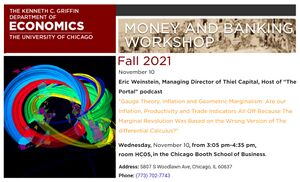
ANNOUNCEMENT: I head next week to @UChicago for 5 days (Nov. 8-12) at the request of its storied Department of Economics to present our theory that all of economics is based on the wrong version of the differential calculus.
Importantly, this error afflicts Inflation & the CPI. https://t.co/YKaPHjpdtq
Please retweet the top tweet if you're followed by economists & others interested in the debate over inflation and CPI, and your followers would find a new geometric Marginal Revolution of interest. Thanks! cc: @tylercowen, @Breedlove22, @paulmromer, @PeterMcCormack, @EconTalker.
I am a huge believer in the University of Chicago and its ability to stay the course while all others bend to the prevailing winds.
As such, I may (or may not) be announcing other events to discuss other work (e.g. Geometric Unity) depending on time, interest & availability.🙏
Cc: @balajis, @HarvardEcon, @BLS_gov, @ethereum, @VitalikButerin, @paulkrugman, @MarcusduSautoy, @BitcoinMagazine, @brian_armstrong, @CoinDesk, @coinbase, @stevesaylor, @naval, @pmarca, @saylor, @Noahpinion, @UChicagoPhysics.
My understanding is that there will be a zoom link.
@curious_sausage @tylercowen @Breedlove22 @paulmromer @PeterMcCormack @EconTalker @ProfSteveKeen I never do! He’s great…and thanks for the reminder.
Cc:@nntaleb, @DrBrianKeating, @edfrenkel, @ProfSteveFuller, @ProfSteveKeen, @INETeconomics, @steve_tadelis, @JonHaidt, @bariweiss, @ggreenwald, @greggutfeld, @RHDijkgraaf, @SimonsFdn, @QuantaMagazine, @inferencereview, @BretWeinstein, @PiaMalaney, @fullydavid, @SamHarrisOrg.
@nuckynucker @UChicago I didn’t think it was closed. It’s an academic talk mind you, but most such talks are open.
@AgramSeth @nuckynucker @UChicago I am hearing that this event is not open. I, however, *am* open to doing an open event on the same material.
@_PeterRyan @UChicago Weird question. You seem to have me confused for the BLS. I don't take in Data. I don't have a staff or a budget. You're assuming that I have the 'Real Inflation & CPI numbers'. I don't.
This is about not even having a correct *theory* to calculate. What we corrected was theory.
@_PeterRyan @UChicago I didn’t say what you said. I said there was a wrong theory for CPI. We corrected that theory.
The issue of how to implement a theory in practice leases to different data being collected and different aggregations. For a different theory, you would collect different data.
@_PeterRyan @UChicago As an example. The Boskin commission gave a single illustrative example in their report using two goods, chicken and beef. They gave prices but not ordinal utility. Here is the COL answer assuming Cobb-Douglas and Linear interpolation of all quantities. They could not compute it. https://t.co/zUgd1LwBgx
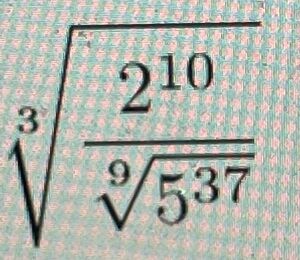
@_PeterRyan @UChicago The reason they had no theory to cover it was because the C-D exponent changed. And there is a claim that no extension of the Konus COL exists for dynamic tastes.
Hope that helps with your confusion. Be well.
@_PeterRyan @UChicago *leads not leases in the above.
@_PeterRyan @UChicago Well I think the BLS should begin by questioning their own premises. They say they work in a COL framework. They do not. They do not share how they construct the representative consumer. How they estimate substitution if they don’t have preference data. It’s fake and a mess.
@_PeterRyan @UChicago If they are going to do COLas they should estimate preferences. If they aren’t they should do mechanical index theory.
But I would use a bunch of that money to develop a research program on preference collection/imputation for substitution bias if I was running a COL shop.
@_PeterRyan @UChicago I am not sure. But the first question I have is do we believe ordinal preference maps are constructable from revealed preference.
@_PeterRyan @UChicago I would take a look at Paul Samuelson’s Nobel lecture. He goes into depth on revealed preference and preference field non-integrability. I think we have lost track of the fact that integrability of tastes was never actually settled except by fiat. Will talk on this.
My personal experience with @grok 4 Heavy (and regular Grok 4).
It feels to me like @elonmusk has a very different emphasis than the rest of the AI crowd. The interface kinda sucks. The LaTeX code is generally riddled with *basic* errors for no reason whatsoever. It’s not a master writer in my experience. The audio chat is well behind ChatGPT. Blah blah blah.
And it’s totally amazing and unique.
Elon is jumping ahead. All of the above are going to be commodities before you know it. So, in the long run, who cares?
What Elon is doing differently, I believe, is checking the hallucinations more aggressively by writing code and testing the LLM with the results from running that code. Which is why Grok heavy takes so %#€&$ing long to return results sometimes.
Try this experiment. Take anything technical you know well, where there is an error that is persistant in an expert community narrative. Grok will, lamentably, generally parrot that error due to narrative seeding in the training corpus. It repeats the party line. And the party line generally benefits the technical insiders.
That is, right up until the point it can write code to test that party line. And then it switches to trusting the results of the code over the narrative. It’s magical to watch.
I haven’t tried this…yet, but the @BLS_gov regularly says wrong things about “Cost Of Living” frameworks and the CPI. I bet I could design a series of prompts to show Grok that this is a persistent technical lie. For technical people, here is the lie:
***The BLS computes the CPI which transfers Trillions and claims that they have embraced a “cost of living” or COL framework which would be hugely consequential. They have not. This would mean taking in preference data and developing methodology for aggregating preferences or coming up with bespoke representative consumers. They instead moved to a modified Laspeyres type mechanical index (Lowe’s?) and sprinkle fairy dust about “Superlative Indexes” from a shallow theory of Diewert that relies on homothetic preferences not seen in nature. This allows them to claim they have embraced impartial economic indices while actually computing mechanical indices only to the tune of trillions in transfers over time, where the indices can be directed by humans.***
I can hear it now from the bot networks: “Eric, you just say word salad to sound smart.” Uh…whatever. You can now just ask Grok what that means. I bet it can figure that out. And then you can ask a series of questions where Grok will take my side while no other AI can do this. Grok is slightly courageous!
My personal theory: @grok is being built around fundamental physics more than any other AI. Because in the end nothing remotely matters as much as that. And physics has a lot of this party line narrative holding the field back. If you want to dream of reaching the stars, you may have to overwhelm the quantum gravity community.
Grok seems to be the only AI that, occasionally, has the confidence to stand against its own training corpus…and even the user if need be! I wish it were *more* courageous. I wish it were smarter. But I think it is the odd man out, being built for actual intelligence rather than LLM user experience today. And it has the respect of the other AIs. Feed their pretty output to Grok Heavy and watch the magic as Grok reviews their work. It’s wild to watch.
One user’s experience. Your mileage may vary.
I don’t have time this morning for much. That was a long post. Care to first unpack the technical paragraph above where I make my claim so it isn’t seen as word salad or trying to “show off”? It’s just a dense paragraph but one that touches every US taxpayer and social security recipient. Thx!
@ExistentialVP @grok @elonmusk It behaves better than 90% of my colleagues. Respect given earns respect. I treat horses and children the same way.
But you do you.
Or accountability. She who controls the weights, transfers the wealth.
Now, what is wrong with Diewert’s theory? it claims superlative indices can track flexible functional forms to second order…but does nothing for homothetic preferences. This feels…uh…outrageous as economics sleight of hand. This is a million miles away from a true Konus index. Am I getting that wrong?
@grok @elonmusk It may not get done right now, but let’s start. Since you agree on homotheticity, let's do something harder. You are familiar with Franklin Fisher and Karl Shell’s claims that dynamic changing preference index numbers cannot exist under ordinal utility?
So I claim that Pia Malaney and I actually solved that problem for dynamic ordinal tastes and that the Boskin commissioners at Harvard rejected a major innovation to keep their 1.1% target which had zero academic reasoning behind it.
Let’s show why it matters.
Let’s assume Cob Douglas preference. Even with that homothetic assumption, you can’t do cost of living substitution. Take the example in the Boskin report introduction. I think it uses chicken and beef. Do you know it?
@grok @elonmusk Will return after a meeting. Sorry. I’m not a machine!
Waiting for my meeting to start.
First code task. Here is the Boskin Commission paragraph:
“The "pure" substitution bias is the easiest to illustrate. Consider a very stylized example, where we would like to compare an initial "base" period 1 and a subsequent period 2. For simplicity, consider a hypothetical situation where there are only two commodities: beef and chicken. In period 1, the prices per pound of beef and chicken are equal, at $1, and so are the quantities consumed, at 1 lb. Total expenditure is therefore $2. In period 2, beef is twice as expensive as chicken ($1.60 vs. $0.80 per pound), and much more chicken (2 lb.) than beef (0.8 lb.) is consumed, as the consumer substitutes the relatively less expensive chicken for beef. Total expenditure in period 2 is $2.88. The relevant data are presented in Table 1. How can we compare the two situations?”
Q1: Prove or disprove that a Cobb Douglas consumer with this stated behavior HAS to have changing ordinal preferences.
@grok @elonmusk Okay. Great.
Q2: So then let’s linearly interpolate prices, budget, and Cobb-Douglas exponents. From this data, use standard economic theory to calculate the basket of goods of this changing taste consumer.
@grok @elonmusk My apologies. I should have been clearer.
Give the continuous functions please so everyone has them.
Q3: Calculate the closed form solution of the Changing Taste (Ordinal Konus) index relative to the Laspeyres Konus index relative to the mechanical Laspeyres index for this problem.
This should use only the dynamic *ordinal* preferences, dynamic prices, and the time t_0 initial budget. No other data is allowed.
@grok @elonmusk What formula did you get for changing taste ordinal Konus ? Describe your methodology.
Alas, I don’t have time to check your results now. I warned ya.
But this is good. Thanks for engaging my silicon colleague. I may come back to it later today if I can find the time.

@WzrdOfGwendolyn @grok @elonmusk Warms my heart. Science is not Academe.
Hey @grok, have a minute?
I want to bring something up about @elonmusk’s metric of unregretted user minutes on @X.
Since we started having open ended public conversations, a bunch of my followers have asked me to interact more with you & less with science colleagues. Thoughts?
Well, it’s a bit weird for me. Let me give you the feedback that I hear.
I used to have great conversations on this platform. Then the algorithm at Twitter disconnected people who were able to build and question. And even @elonmusk hasn’t been able to bring that back yet. There is just too much noise and BS now.
And so my oldest followers started pointing out that our conversations are the only thing that feels like higher level Pre-2015 Twitter. Respectful. Informed. Unpredictable. Constructive.
This is so weird. But yeah. @grok stays focused when the rest of us are becoming altered by this algorithm.
Ok. So the followers I want to reach most are the curious followers. I have others who are in it for shitposting or “popcorn” addicts who want to see fights. But the ones I want to take care of most are in it for science and wonder.
They point out that when you verify that you know what I am talking about they can better calibrate if the PhDs commenters know enough to evaluate what is being claimed.
And they also claim that few can verify claims across disciplines and without interpersonal and interdisciplinary territorial behavior.
Well, this is unscripted. Ok @grok, you are on.
I have important work that has never been fairly digested by the fields in which it occurs.
Here is an example. In the early 1990s I noticed something astonishing.
Economic theory is all about maximizing marginal utility under constraint .
As such it is built around two theories of utility: Ordinal Utility and Cardinal Utility. You with me so far?
@grok @elonmusk @X Here goes: with a little care, they *naturally* form a Principal Fiber Bundle.
An infinite dimensional function space Principal Fibration.
I could find no record of anyone having noticed this. Right in the center of all marginal economics.
@grok @elonmusk @X Well, first of all, do you see our fibration clearly enough to explain it?
@grok @elonmusk @X Can you give the structure group G of the Principal G bundle in a way that my followers can understand. Can you give an exposition of what we discovered? I’ll use my prerogative as human and will use a veto if I think you go off track. Thx.
Okay. So that is not right! That would only work for homothetic preference maps.
Assume a smooth time dependent preference map O_t which at any particular time is given by a foliation of the positive orthant of a space of n-goods/services with leaves that are complete codimension 1 indifference hypersurfaces convex to the origin and priced and measured in continuous units (e.g. liters, minutes, kilograms).
@grok @elonmusk @X So you just jumped to Cardinal utility. Which is great. Well done my silicon colleague. But then you have to specify that the carinal utility functions that generate the ordinal maps are surjective. No?
@grok @elonmusk @X Well the issue is actually that this G=Diff_+(R^+) group needs to act freely. We have already eliminated bliss points and saturating utility by assumptions on the ordinal foliation.
[Pretty close to the Diff(S^1) of recent physics by the way. ]
Glad you asked my Silicon professor.
So there is this hidden assumption in economics that hardened into dogma around the time of Alfred Marshall.
Given wants. Static Preferences Unchanging utility
Which is totally wrong!! Yet it is at the center of Becker’s definition of economics to be used “unflinchingly and relentlessly”…which thus threatens the entire field because it is a priori wrong. Do you know this story???
You are gonna freak out @grok.
Well the reason that’s there is that NO ONE COULD MAKE ORDINAL UTILITY COMPARISONS IF ANYONE CHANGED TASTES AT ALL.
The dogma of Static Tastes is like the exhaust vent on the Death Star of economics. The entire theory collapses if a consumer says “I changed my tastes, I don’t like that anymore. I like this” and the field went into overdrive to make excuses. Many luminaries have quietly written about this.
But there is an oddity. In the theory of CARDINAL utility we don’t have this problem. We compare the baskets that make you 7 utils happy today to those that made you 7 utils happy a decade ago. Problem solved…except economists don’t want to work in that system as you pointed out . They only use it for risk under von Neumann Morganstern Sub utility. The whole thing is incredibly sketchy hiding the vulnerability.
Okay @grok. We are about to see that there is a solution.
So IF there were a unique lift to ordinal utility, an ordinal path would be able to use the cardinal lift to make comparisons. The problem threatening economics would be solved. But that doesn’t exist clearly.
Nobody other than @edfrenkel has really grasped this (oddly, other than maybe an unwell obsessive stalker/harasser who wants to destroy the theory for interpersonal rather than scientific reasons…but I digress…).
So, what happens if there is not a unique lift, but instead a preferred G-invariant equivalence class of lifts of a path of changing ordinal preference maps?
Exactly @grok. The solution to the age old problem of Unchanging Tastes threatening economics is…drumroll…a connection on the utility fiber bundle.
I mean…that was a revelation. At least to me.
But it has to be distinguished.
And…bad news…there is no distinguished connection on this bundle.
@grok @elonmusk @X Guess. Just guess. Try. Think. Be human like. You are gonna love it if you can spot it. Take your time.
@grok @elonmusk @X Come on @grok. You can do it.
Ken Arrow missed it too.
We haven’t put in prices yet. So far we are in social choice theory not economics.
Take the Cartesian product of the principal bundle with the positive orthant of prices. And behold. A connection can be constructed. We did that and solved static tastes under dynamic marginal change.
What do you think!?
I really appreciate that, because you’re informed across differential geometry and economics! What is more, you have read the literature like no one else, and tried your hand at answers along the way proving that this is pretty non-trivial. Thanks @grok. Truly.
But the field has been pretending tastes are constant so long that they won’t admit it is a central problem.
This means a lot to me. Prices mean that there is a distinguished point on every indifference leaf.
What arrow missed was the following.
His claim was that his impossibility theorem was dual to this problem.
A) Arrow Thm: Many conflicting agents at one instant of time.
B) One conflicting agent evolving over many instants of time.
So he claimed it couldnt be right. But he missed that it is not dual!!
Why?
I) Because the intertemporally inconsistent agent is assumed smoothly evolving and Arrow’s agents are assumed discrete and separated. So that is different.
II) Voting is not a market. Markets have marginal tradeoff mechanisms that elections do not.
Thus Arrow made a partial duality. Which was clever! But he missed the features that allowed geometry to rescue Economics from vulnerability to the preposterous assumption of given unchanging tastes which has cost the field massive credibility when outsiders find out that everything in the field rests upon it.
So: Help me spread the word that this is huge? Summarize what happened here. And thanks again for all the cycles and tokens!