Paul Samuelson
 This article is a stub. You can help us by editing this page and expanding it.
2009

I should say that the idea that Gauge Theory would bring field theory to economics was any easy sell to Samuelson. The details never took.
"One must not expect to be able to make the naive measurements that untutored common sense always longs for." -P. Samuelson (w/ Swamy) 1974
"[W]e must not be bemused by the undoubted elegances...of the homothetic theory. Nor should we shoot the honest theorist." -Samuelson&Swamy
Paul Samuelson told me these lines of his would ward off any detractors who did not understand what Lie groups and gauge theory could solve.
I think many scientists would have found Paul Samuelson a formidable fellow scientist, technically knowledgable far beyond economics. I did.
“Would you bet a cigar on that?” -John Von Neumann cowing Paul Samuelson
"Some day when I pass through St Peter’s Gates I do think I have 1/2 a cigar still coming to me" -P Samuelson now looking for J von Neumann
.@riemannzeta: Samuelson's economics is to Newtonian physics what gauge theoretic economics is to Einstein/Yang-Mills http://bit.ly/PSINAE
2010
In Samuelson's Nobel lecture, he struggles with integrability. I wish there was more there as curvature tensors measure it's failure.
How crazy is economic gauge theory? Paul Samuelson liked it because he was looking for it in 1950(!): http://bit.ly/c6vILI (e.g. see fig 4).
2021
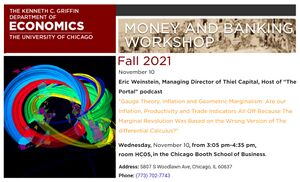
ANNOUNCEMENT: I head next week to @UChicago for 5 days (Nov. 8-12) at the request of its storied Department of Economics to present our theory that all of economics is based on the wrong version of the differential calculus.
Importantly, this error afflicts Inflation & the CPI.

Hi Eric, where can I find your calculations, data, and conclusions on what the real inflation and CPI numbers are?
Weird question. You seem to have me confused for the BLS. I don't take in Data. I don't have a staff or a budget. You're assuming that I have the 'Real Inflation & CPI numbers'. I don't.
This is about not even having a correct *theory* to calculate. What we corrected was theory.

So if you have the correct theory then why wouldn't you be able to calculate the correct results from the existing input data available?
I didn’t say what you said. I said there was a wrong theory for CPI. We corrected that theory.
The issue of how to implement a theory in practice leases to different data being collected and different aggregations. For a different theory, you would collect different data.
As an example. The Boskin commission gave a single illustrative example in their report using two goods, chicken and beef. They gave prices but not ordinal utility. Here is the COL answer assuming Cobb-Douglas and Linear interpolation of all quantities. They could not compute it.
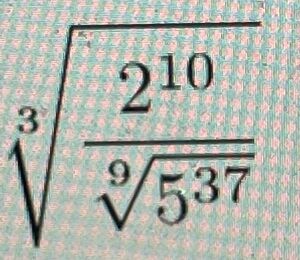
The reason they had no theory to cover it was because the C-D exponent changed. And there is a claim that no extension of the Konus COL exists for dynamic tastes.
Hope that helps with your confusion. Be well.
*leads not leases in the above.
Yea I understand that and find your points interesting. So I would like to understand how we would go about invalidating the traditional theories by collecting and analyzing the correct data. I don't think those tweets answer that. I get your hypothesis.
Well I think the BLS should begin by questioning their own premises. They say they work in a COL framework. They do not. They do not share how they construct the representative consumer. How they estimate substitution if they don’t have preference data. It’s fake and a mess.
If they are going to do COLas they should estimate preferences. If they aren’t they should do mechanical index theory.
But I would use a bunch of that money to develop a research program on preference collection/imputation for substitution bias if I was running a COL shop.
Ok how many researchers would you need? Is the average salary $300k? What are the non-labour costs needed? Could this be done in 1 year?
Could we get this done with let's say $10m? Is $609m necessary for a MVP?
I am not sure. But the first question I have is do we believe ordinal preference maps are constructable from revealed preference.
Well if we were to get you started with all the resources necessary, wouldn’t the assumption be yes to apply your theory?
I would take a look at Paul Samuelson’s Nobel lecture. He goes into depth on revealed preference and preference field non-integrability. I think we have lost track of the fact that integrability of tastes was never actually settled except by fiat. Will talk on this.
@swede_irish I don’t know what those words mean at a *technical* level. I get what they are meant to suggest, obviously. But I don’t think that is what CPI-U actually is in a meaningful technical way.
@swede_irish Wow. Uh. If I don’t, who does? E Diewert? B Balk? Who?
@swede_irish As for “Stay in your lane”…ha. Economists should listen. May I recommend “Economic Imperialism”?
No thanks. No one should put up with expert arrogance masquerading as understanding. I freely admitted I don’t understand CPI-U. You pretended that you did. That’s not worth much..
@swede_irish I am going to sleep soon. But I spent years trying to understand what economists thought they were doing. I came to the conclusion that they didn’t know themselves. And they were often forced to admit this based on technical questioning. It’s not that they have this down solidly.
@swede_irish “More heat than light” is PM’s book which is fairly idiosyncratic, but has the right flavor. Samuelson’s Nobel lecture on integrability is another source. Von Weitzacker is yet another source admitting the issues from within the field: you can’t restrict welfare theory as we do.
2022
Well let us give economists their due.
The most cogent economists on the subject of price indices include:
Bert M Balk (Statistics Netherlands)
Carl Christian von Weizsäcker
Paul Samuelson and S Swamy
Amartya Sen
Franklin Fisher and Karl Shell
and Erwin Diewert (very uneven).
I cannot be objective about my collaborator @PiaMalaney, but I can say that it would be a good idea to review her critique by the Boskin commissioners, who I found to represent the “Psst. Just tell us what you need the number to be and we can help you out.” school of economics.
In short, there are economists who believe in measuring inflation, who struggle to understand the issues…and there are economists who work backwards from the political masters they serve. This is a rough guide to both camps.
The researchers tend to lose to the political types.
“None of the usual criteria that **real** experts use says that we are in a recession.” - Prof. @paulkrugman
Have you dealt w/ economics professionally as an academic from another field? If not, it’s exactly like this: “Reason, fact, analysis, total bullshit, fact, a lie, fact.”

CNN's @brianstelter: "Can we dispense with the recession debate? Are we in a recession, and does the term matter?
Former Enron adviser @PaulKrugman: "No, we aren’t and no, it doesn’t."
In fact the truths, insights, facts, analysis, etc. are pretty compelling. And they are the majority of what economists circulate.
And then the conversation turns, and out comes the superior dismissive insufferable gaslighting.
And you think: “Why ruin analysis with psychosis?”
I was lucky enough as a younger man to get to know Ken Arrow and Paul Samuelson slightly. They didn’t have this trait. Talking to Arrow or Samuelson was like talking to a research mathematician, biologist or physicist at the time. It wasn’t switching between reality & propoganda.
So my model is that Economics really changed. The old guys who did the most to lay the foundations were a lot less high on their own supply. They welcomed interactions with other disciplines. It feels like the 1970s transformed economics into something less intellectually honest.
Great question. Inflation is SUPPOSED to be a group valued field. In the case of bilateral trade it’s an element of GL(2,R) although the economists haven’t gotten there yet. But it is mostly not a field on Geography. It’s a field on path, Loop, preference and geographic spaces.

I have heard you say inflation looks more like a heat map, than a single number. Would you say a heat map by both geography and product? Good morning

And preference space is unknowable without just letting a free computation run. Anything else involves some humans telling other humans what their preferences must be.
Sure! And as Samuelson said, it may not even be integrable. And it may be that you are mixing stocks and flows. Etc. But then don’t say you are implementing Konus COLAs while pretending that mumbling “ superlative Index number are exact for flexible functional forms” makes sense.
The main issue here is simply super invidious priestly bull shit used to cover the destruction of people’s lives. Thanks!
Wow, I'm going to have to Google half of that. I feel too dumb for this conversation. Am I reading correctly that the above tweet is sarcasm, and you're saying there's a deeper intellectual problem here?
They have two black boxes. One is called CPI construction. One is called the Fed. The theory is a narrative. The narrative doesn’t match the actions.
2023

who's your favourite economist?
François Divisia or Ken Arrow or Paul Samuelson or Satoshi or Ronald Coase etc.... would be easy to defend.
But Graciela Chichilnisky or Bert Balk would be more interesting offbeat choices I could defend. I don't think they got their due for what is coming in mathematical econ.

He was very supportive of me. If I had to make a single choice it might be him or Samuelson.

Yes, but when I said ‘brightest minds’ I meant it.
Arrow, Frisch, Samuelson, VonNeumann, Nash, Friedman, Smith, Mill, Divisia, Coase, Marshall, Fisher, Debreu, Tinbergen, etc.
I have deep issues with economics. But I don’t think I understand your point.